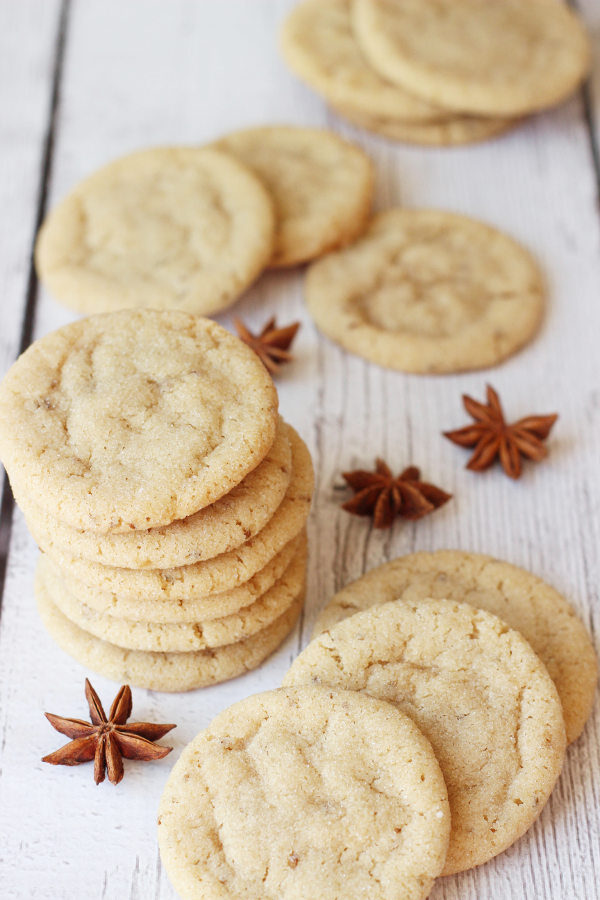
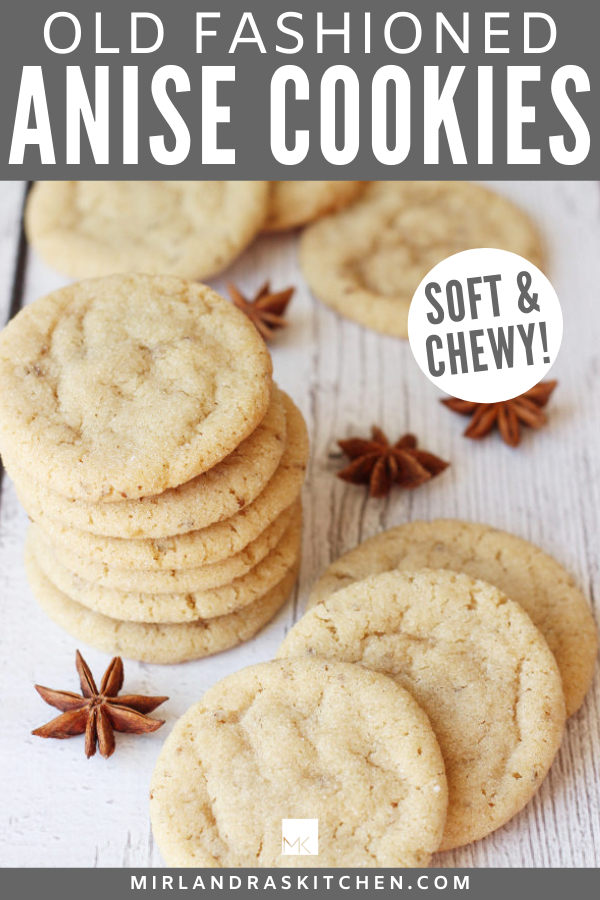
These old fashioned Anise Cookies are a rare treat. Soft, buttery cookies with a little crunch from the sugar on the outside and a hint of licorice flavor. My parent’s and grandparent’s generations remember them as a treasured Christmas cookie that lent something unusual to the platters of cookies during the Christmas season. This is a recipe that deserves a spot on your regular holiday baking list!
I originally shared this recipe back in 2016, and today I’m updating it with new information and my best tips after making these cookies for over a decade.
Anise Cookies (Italian Anise Cookies / Anisette Cookies / Licorice Cookies)
If there’s one cookie that instantly brings back the feeling of an old-fashioned Christmas—warm kitchen, sprinkles everywhere, and plates of homemade treats being passed around—it’s a batch of classic Anise Cookies. These little puffy cookies go by a handful of names: Italian Anise Cookies, anisette cookies, licorice snaps, or even licorice cookies if someone only remembers the flavor. But no matter what you call them, they’re a beloved holiday staple for a reason.
Anise cookies are not actually licorice cookies! Anise is a culinary spice (can you spot the star shaped pods in the cookie photos? – That’s anise). Anise is a spice used in baking and sometimes in cooking (think Vietnamese Pho).
Licorice candy is made from the much stronger flavored licorice root! It is a totally different flavor. If you dislike black jelly beans or black licorice (I strongly dislike both) you will likely still love these cookies.
Anise Cookies are soft, lightly sweet, and just a little bit nostalgic. They’re the kind of cookie that seems simple at first glance… until you taste that unmistakable anise flavor in the dough. It’s warm, cozy, a touch floral, just slightly licorice-like—but not in the “black jelly bean” way people shy away from.
When people say these cookies taste like “licorice,” it’s usually just because anise has a similar flavor profile. But baked into cookies? It’s soft, sweet, and surprisingly comforting.
The texture is tender and cake-like, almost like a tiny vanilla-anise tea cake with festive sprinkles on top. And because they’re small and not overly sweet, it’s incredibly easy to justify eating “just one more.”
What Are Anise Cookies?
Anise Cookies are a classic Italian American recipe traditionally made for holidays, celebrations, weddings, and of course—Christmas.
If you grew up in an Italian household—or anywhere near Italian American bakeries—you probably remember these from weddings, holidays, and cookie trays that never seemed to empty. If they’re new to you, get ready: these cookies are about to become a tradition.
Families have their own variations, but most fall into two camps:
- The soft bakery-style Italian Anise Cookies – These are pillowy and light, with a sweet white glaze and colorful nonpareils. Think Italian bakery case meets holiday cookie tray.
- The more traditional anisette cookies – These are often a bit drier or firmer and may include more pronounced anise flavor (sometimes even anise seeds baked into the dough).
This recipe leans towards a more traditional anisette cookie but it is soft like a perfect sugar cookie or snickerdoodle.
What Is Anise?
Anise (or Pimpinella anisum) is an herb whose tiny seeds are famous for their sweet, aromatic flavor. It’s been used for centuries in baking, candy making, and liqueurs like anisette, sambuca, and ouzo. In Italian American baking, anise is a signature holiday note—just as warm and traditional as cinnamon or nutmeg.
Anise is most commonly pronounced as An-iss with the emphasis on the first syllable and a short “i” sound. I’ve said it “uh-NEEZ” for years but that pronunciation isn’t really considered correct in the US or England at this point.
What Does Anise Taste Like?
If you’ve never had anise before, the flavor is gently sweet and slightly herbal—similar to fennel or mild licorice. But don’t worry: even people who don’t love licorice-flavored candy often love anise in baked goods. It’s softer, rounder, and more aromatic than anything you’d find in a candy store.
Anise Extract vs. Anise Oil vs. “Licorice Flavor”
This can feel confusing so let me break it down a bit here. Just think – five minutes on here is like an entire ingredient class at pastry school! You’re welcome!
Anise extract
• Most common in baking
• Mild, sweet, and easy to control
• Perfect for cookies, cakes, and frostings
Anise oil
• Much stronger—often 8–10x more concentrated
• A little goes a very long way
• Don’t use anise oil for this recipe – we will all have regrets!
Licorice flavor
• Not the same thing
• Usually made from licorice root, not anise
• Stronger, darker, more bitter
For authentic Anise Cookies we will stick to anise extract and anise seed. It gives you all that classic flavor without overpowering the cookies.
Less Common Ingredients You’ll Need for Anise Cookies And Where to Buy Them
Anise Cookies are mostly made from pantry staples. But there are two ingredients that make them taste like the classic Italian version: Anise Extract and Anise Seed. You can’t leave them out and you can’t substitute something else for them.
Anise Extract: This is your main flavoring. Look for pure anise extract rather than imitation for the best flavor. McCormick and Watkins both sell one. Not all grocery stores will carry it in the baking isle but it is inexpensive on Amazon now.
Anise Seed: Not everyone uses anise seed, but it adds tiny flecks of real anise flavor throughout the dough and I love it in this recipe. Try not to skip it! I do find it hard to find in about half of grocery stores with the herbs and spices but you can grab it on Amazon too.
Preventing Spreading in Your Cookies
These cookies are simple, but the details matter—especially if you want that classic rounded shape and soft texture.
Troubleshooting if your cookies spread too much:
- Make sure the butter is just softened—not melted
- Chill the dough as instructed
- Use parchment paper instead of greased cookie sheets or just bake right on the cookie sheet
- Measure the flour with the spoon and level method (ok, this is more an issue if your cookies don’t spread out the right amount but still – measure the right way for the best texture!)
Gifting Ideas
Because they’re durable, pretty, and full of traditional holiday flavor, Italian Anise Cookies make fantastic gifts. They hold up well, stack beautifully, and make your whole gift smell like the holidays.
Best Ways to Pack The Cookies
- Small holiday tins lined with parchment
- Cellophane bags tied with ribbon
- Cookie boxes with dividers
- Individual self-sealing cellophane cookie bags (so great for dry climates like Southern Idaho where I live!)
FAQs
Are these the same as anisette cookies?
Yes! Anisette Cookies and Anise Cookies are generally the same concept. Some families use more anise seed or make them a bit firmer, but the flavor and idea are the same.
Can I use anise oil?
Nope! This is a way stronger ingredient. Don’t mess with it. (It also gets used as insect repellent if that gives you a clue…)
Can I make them without anise?
Not really. I mean you would have yummy cookies if you used vanilla instead but they won’t be Anise Cookies anymore…
Can I double the recipe?
Absolutely. These cookies are perfect for big batches, and the dough doubles well with no adjustments needed.
Are they supposed to be soft or crunchy?
These should be soft and chewy like a perfect soft sugar cookie. If they are crunchy you overbaked them.
My Favorite Cookie Making Tools for Anise Cookies
- 1 teaspoon size Cookie Scoop – this is so helpful for quickly making these small cookies
- USA Brand Cookie Sheets – a great quality cookie sheet that is heavy makes a big difference in the quality of cookies you can bake. This helps get those perfectly baked bottoms we all love!
- This good quality hand mixer makes baking cookies quick and easy
More Unique Christmas Cookies To Love:
Anise Cookies AKA Licorice Cookies
Ingredients
- 1 cup salted butter (softened) (or 1 cup unsalted butter + 1/2 teaspoons salt)
- 1 cup granulated sugar
- 1 cup light brown sugar
- 1 large egg
- 1 ½ teaspoon anise extract
- 1 Tablespoon anise seeds
- 2 ½ cups all purpose flour
- ½ teaspoon baking soda
- ½ teaspoon cream of tartar
- ½ teaspoon salt
Instructions
- In the bowl of a stand mixer, cream the butter and sugars together on medium speed for about 3 minutes until light and fluffy. Scrape the bowl as needed.
- With the mixer still on medium speed, add the egg, anise extract, and anise seed. Scrape the bowl again.
- In a medium mixing bowl whisk together flour, baking soda, cream of tartar and salt.
- With the mixer on low speed slowly add the dry ingredients to the creamed mixture and beat until the dough is well combined.
- Chill the dough for two hours.
- Preheat the oven to 350 F and lightly butter two cookie sheets.
- Use a melon baller to form small balls of dough and roll in granulated sugar to evenly coat. Place balls of dough on greased baking sheets and bake at 350 F for 10-11 minutes until the cookies are starting to set and just becoming golden at the edges.
- Let cool on the baking sheets for five minutes and then transfer to wire racks to cool completely.
Your Rating Matters
When you leave a comment or star rating, it means more than you might think. It helps me understand what you’re enjoying, builds trust for other readers, and supports real, tested cooking content. If you have a moment, I’d truly appreciate you sharing your experience. - Mirlandra
Nutrition Estimate
A Note on Nutrition
Nutritional info is an imperfect estimate. Please take it with a grain of salt.
Recipe Credit: Special thanks to Elizabeth Barrett and family for sharing their wonderful recipe for this classic. I have not adapted the recipe at all. It is an honor to get to share and preserve a classic recipe like this that should not get lost over time!
Aileen says
Hi Mirlandra,
I signed up again because I haven’t been receiving your posts for some reason. I wanted to say that I grew up with my mother’s German Christmas cookies. She made sugar cookies with no baking powder and with a very thin colored glaze, cookies with ground walnuts shaped with a cookie press and one end of the cookies dipped in chocolate, 3-tiered cookies with jam placed in an indentation in the center and sprinkled with powdered sugar, meringue cookies, sandies which are like the wedding/Danish/Mexican cookies except they were shaped into half moons and last but not least, Anise cookies! But the recipe was different from this one, they were small but shaped like the chocolate covered cookies with the marshmellow inside, know what I mean? They looked like they had a dome on top but no chocolate. After baking she’d set them on the counter overnight uncovered. They’d get super hard but then she’d store them in a covered container for 2 or 3 weeks until they softened somewhat. They were never really too soft but oh my goodness, that smell and taste of anise was divine! I loved them. Unfortunately, she passed away too early in 2000 and my siblings and I never got her recipes because she was still baking and sending them to us every Christmas. I’m really sad about that although I do have her sugar cookie recipe.
Mirlandra says
You are the 2nd reader this week to check in! I have not been sending a newsletter out (busy getting recipes out before the holidays and the we were traveling). I’m trying to shoot one out this week! It is on my list for today but along with about 25 other things and a busy toddler who wants about 110% of my attention after getting a ton of attention from his relatives over Christmas. I have a friend who is German and lives here now. I will drop her a note today and see if she has a recipe like this. I feel like she made something similar for our book club two years back! If I get anything I will shoot you an e-mail!
Mirlandra says
I asked my German friend about these cookies and realized today I never shared the recipe she sent me here! This is what she sent – I hope it is helpful!
I found a recipe for Anise cookies in my Bavarian cook book from around 1930. I never made it myself (I don’t like anise), but these are all traditional recipes.
4 eggs
1.3 cups powdered sugar
1 tsp anise
1-1.3 cups flour
Beat eggs and powdered sugar really well, until frothy. Add anise. Then slowly add flour.
With a teaspoon put little drops of dough on a baking sheet, lined with parchment paper. Drops should keep their shape when put on the baking sheet, but the surface of the drops should get smooth (does that make sense?). Let dry over night in a not too warm room. On the next day bake at 300 degrees until light brown.
Makes about 100 cookies.
I did my best to translate, but you might want to change measurements or wording, so it sounds accurate and not confusing.
Aileen says
Mirlandra, I just now saw your comment! My mother was from the Bavarian part of Germany but her recipe is a bit different. I wish I could attach a picture that I found online of what hers looked like. As I mentioned in my previous post from a few years ago I never got her recipe but the following is pretty close. She made a lot of these in one batch but the recipe below only makes 12.
Anise Drop Cookies
(Yield: 12 cookies)
1 egg
1/2 cup sugar
2 drops anise oil
1/2 cup flour
1 teaspoon anise seed
3/4 teaspoon lemon zest
Pinch salt
Butter, to liberally grease the baking sheet
Cream together the egg, sugar, and anise oil until light and fluffy. In a separate bowl, mix together the flour, anise seed, lemon zest, and salt. Beat the dry ingredients into the wet (the dough will be thin, almost like cake batter).
Drop by spoonful’s onto a greased cookie sheet, 1-inch apart. Let stand 12 hours or overnight (dough will harden).
Bake at 300 degrees for 20-25 minutes until the cookies are puffed and look like mushroom caps, and the bottoms are lightly golden.
Mirlandra says
Aileen thank you!!! It is so kind of you to share this!!!
Lucy says
These are similar to German
Springerle cookies. They are rolled out with a patterned
rolling pin, cut into small squares and left to dry overnight. They puff when they bake. They taste better and better each day they sit.
Beauties and a fav but this year I am tying yours . They sound delicious and much easier. Thanks for the recipe!
Mirlandra says
Well I have to say when it comes to cookies SO many wonderful recipes are rooted in German history! I hope you will enjoy these just as much. It is always nice to find a simple version of something you love!
Becky says
Theses are wonderful! It so nice to have a soft anise flavored cookie. And so easy to make. Everyone I have given them to gave them them a 5 star rating.
Mirlandra says
Thank you, Becky! I’m so glad you are enjoying the recipe as much as we do!
Rochelle Winston Davies says
Do the cookies flatten on their own when cooking or should we slighted flatten with a fork before placing in the oven?
Mirlandra says
Hi Rochelle! They flatten very nicely on their own! Happy Baking!!!
Deborah K says
Love nice thin light licorice flavor
Mirlandra Neuneker says
Thank you! It is such a fun cookie 🙂
Joan Berger says
How many cookies does this recipe make? Thank you
Mirlandra Neuneker says
Hey friend, This recipe makes 60 small cookies. I hope that helps. Enjoy!